 7d7c7d3f0c MODULES_BUILD_DESKTOP, MODULES_BUILD_TESTS and MODULES_BUILD_EXAMPLES default to on everywhere except Android. Wayland, the window layer, ImGui, GLFW, OIDN, PortAudio and the desktop applications build only with the desktop option. Graphics gains a GraphicsVulkan library with the platform-free Vulkan context, GPU timer and frame code. UnitTest++ is built from Externals/unittest-cpp directly instead of through lalr, which nothing else uses. Presets: linux-debug, linux-release, android-arm64-debug and android-arm64-release (NDK toolchain from ANDROID_NDK_HOME, API 31, arm64-v8a). |
||
|---|---|---|
| .. | ||
| private | ||
| public | ||
| tests | ||
| CMakeLists.txt | ||
| README.md | ||
Profiling
Memory Leaks
Example program with memory leaks:
#include "allocators.h"

void test_call22() { new int; }
void test_call21() { new float; }

void test_call11() {
  test_call21();
  test_call22();
}

int main(char argc, char* argv[]) {
  tp::ModuleManifest* ModuleDependencies[] = { &tp::gModuleAllocators, NULL };
  tp::ModuleManifest TestModule("Test", NULL, NULL, ModuleDependencies);
  TestModule.initialize();

  test_call11();

  TestModule.deinitialize();
}
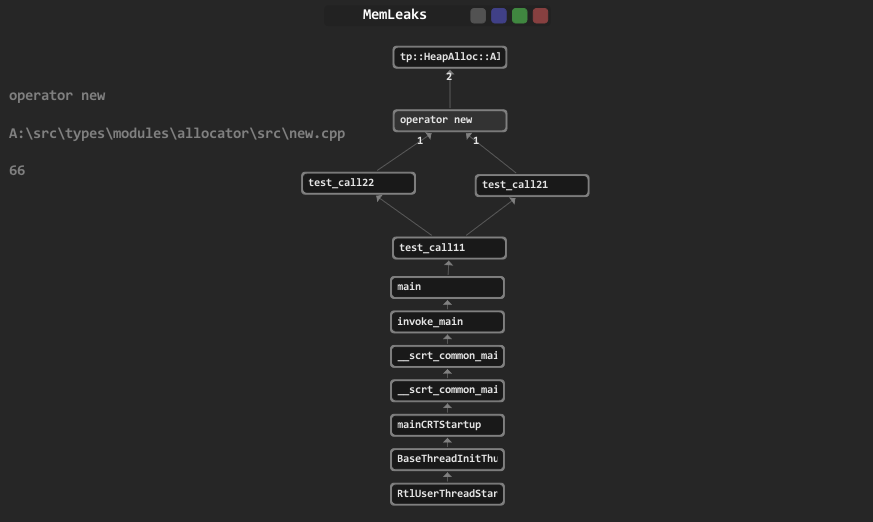
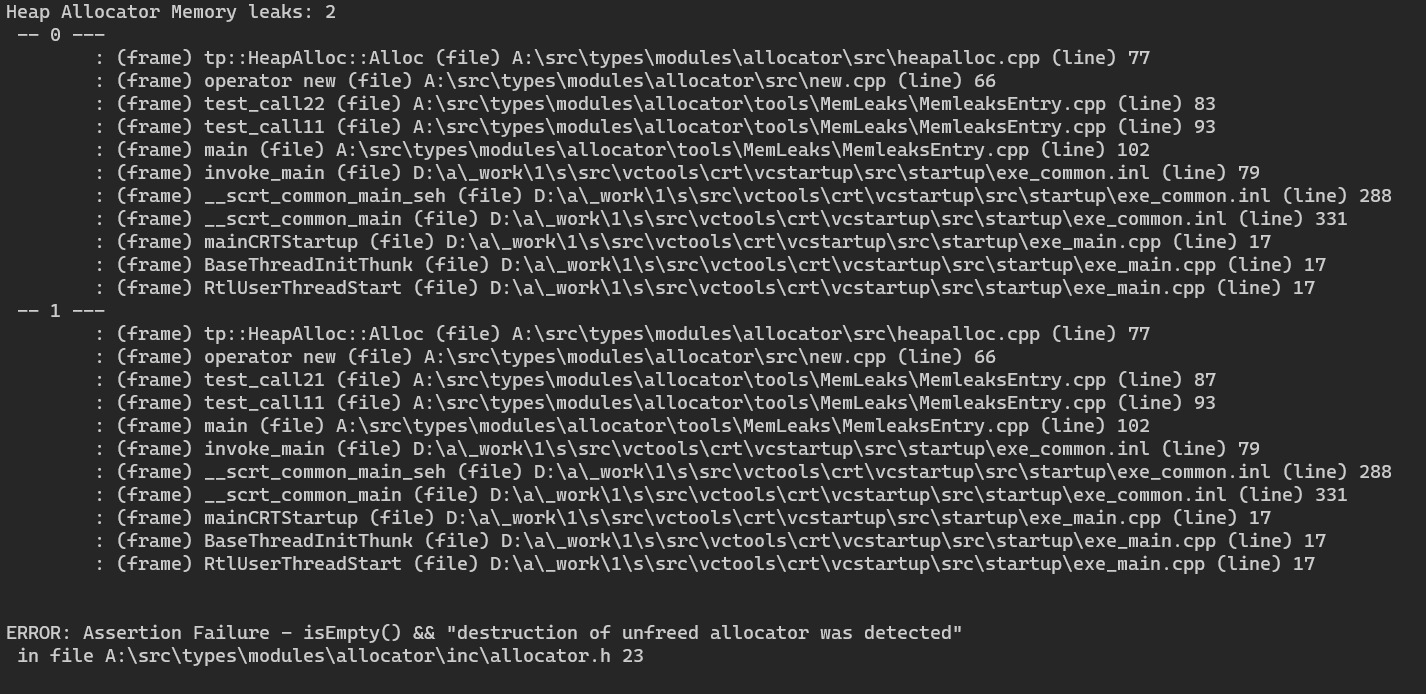
If memory leaks were detected it will be logged in the output console.
Also debug.memleaks binary will be generated in the working directory that can be viewed with MemLeaks Viewer.