pbrt, Version 4
==================
[ ](https://github.com/mmp/pbrt-v4/actions?query=workflow%3Acpu-linux-build-and-test)
[
](https://github.com/mmp/pbrt-v4/actions?query=workflow%3Acpu-linux-build-and-test)
[ ](https://github.com/mmp/pbrt-v4/actions?query=workflow%3Acpu-macos-build-and-test)
[
](https://github.com/mmp/pbrt-v4/actions?query=workflow%3Acpu-macos-build-and-test)
[ ](https://github.com/mmp/pbrt-v4/actions?query=workflow%3Acpu-windows-build-and-test)
[
](https://github.com/mmp/pbrt-v4/actions?query=workflow%3Acpu-windows-build-and-test)
[ ](https://github.com/mmp/pbrt-v4/actions?query=workflow%3Agpu-build-only)
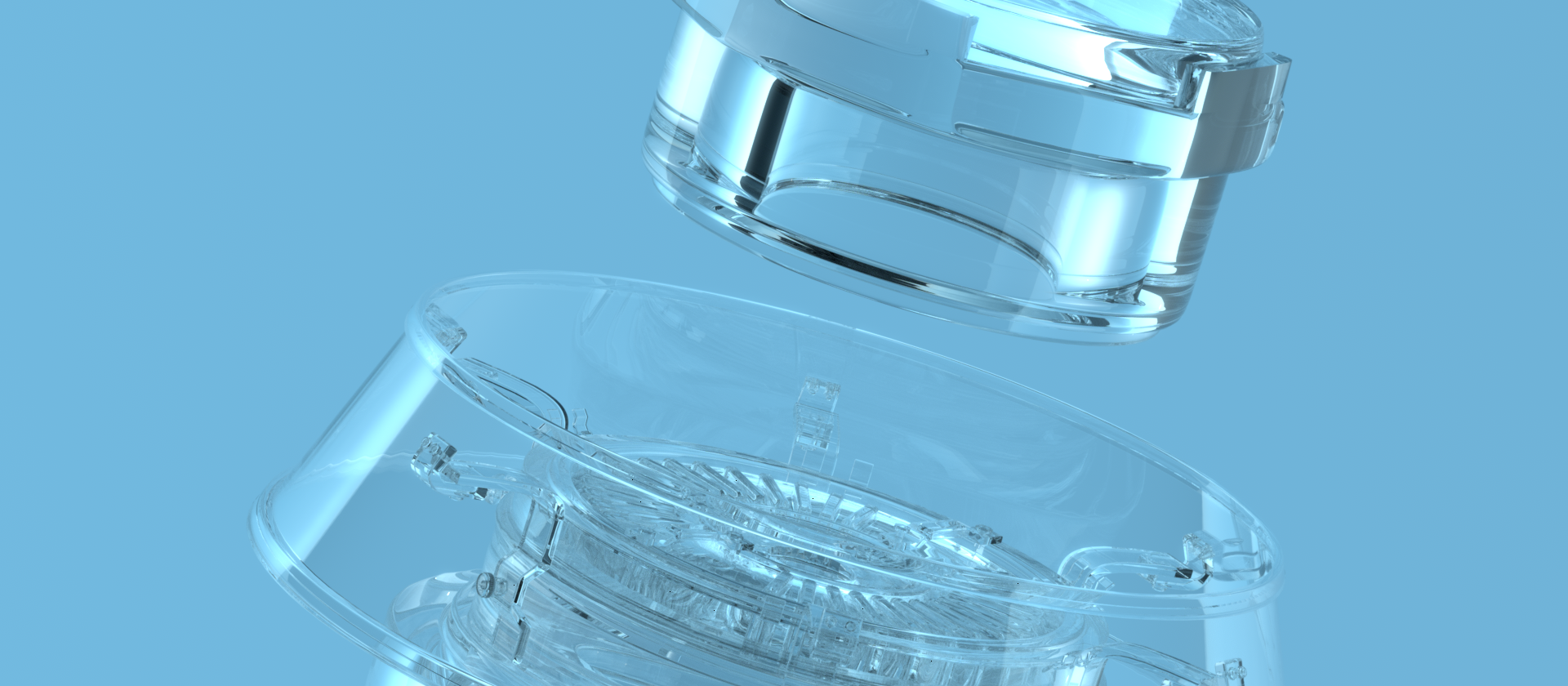
This is pbrt-v4, the rendering system that is
described in the fourth edition of *Physically Based Rendering:
From Theory to Implementation*. The printed edition can be
bought from all of the usual places and the [full contents of the book are freely available online](https://pbr-book.org).
Resources
---------
* A number of scenes for pbrt-v4 are [available in a git repository](https://github.com/mmp/pbrt-v4-scenes).
* The [pbrt-v4 User's Guide](https://pbrt.org/users-guide-v4.html).
* Documentation on the [pbrt-v4 Scene Description Format](https://pbrt.org/fileformat-v4.html).
Features
--------
pbrt-v4 represents a substantial update to the previous version of pbrt-v3.
Major changes include:
* Spectral rendering
* Rendering computations are always performed using
point-sampled spectra; the use of RGB color is limited to the scene
description (e.g., image texture maps), and final image output.
* Modernized volumetric scattering
* An all-new `VolPathIntegrator` based on the null-scattering path
integral formulation of [Miller et
al. 2019](https://cs.dartmouth.edu/~wjarosz/publications/miller19null.html)
has been added.
* Tighter majorants are used for null-scattering with the `GridDensityMedium`
via a separate low-resolution grid of majorants.
* Both emissive volumes and volumes with RGB-valued absorption and scattering coefficients are now supported.
* Support for rendering on GPUs is available on systems that have CUDA and OptiX.
* The GPU path provides all of the functionality of the CPU-based
`VolPathIntegrator`, including volumetric scattering, subsurface
scattering, all of pbrt's cameras, samplers, shapes, lights, materials
and BxDFs, etc.
* Performance is substantially faster than rendering on the CPU.
* New BxDFs and Materials
* The provided BxDFs and Materials have been redesigned to be more
closely tied to physical scattering processes, along the lines of
Mitsuba's materials. (Among other things, the kitchen-sink UberMaterial
is now gone.)
* Measured BRDFs are now represented using [Dupuy and Jakob's
approach](https://rgl.epfl.ch/publications/Dupuy2018Adaptive).
* Scattering from layered materials is accurately simulated using Monte
Carlo random walks (after [Guo et al. 2018](https://shuangz.com/projects/layered-sa18/).)
* A variety of light sampling improvements have been implemented.
* "Many-light" sampling is available via light BVHs ([Conty and Kulla 2018](http://aconty.com/pdf/many-lights-hpg2018.pdf)).
* Solid angle sampling is used for triangle
([Arvo1995](https://dl.acm.org/doi/10.1145/218380.218500)) and
quadrilateral ([Ureña et al. 2013](https://www.arnoldrenderer.com/research/egsr2013_spherical_rectangle.pdf))
light sources.
* A single ray is now traced for both indirect lighting and BSDF-sampled direct-lighting.
* Warp product sampling is used for approximate cosine-weighted solid angle
sampling ([Hart et al. 2019](https://onlinelibrary.wiley.com/doi/abs/10.1111/cgf.14060)).
* An implementation of Bitterli et al's environment light [portal sampling](https://benedikt-bitterli.me/pmems.html)
technique is included.
* Rendering can now be performed in absolute physical units with modelling of real cameras as per [Langlands & Fascione 2020](https://github.com/wetadigital/physlight).
* And also...
* Various improvements have been made to the `Sampler` classes, including
better randomization and a new sampler that implements [Ahmed and Wonka's blue noise Sobol' sampler](http://abdallagafar.com/publications/zsampler/).
* A new `GBufferFilm` that provides position, normal, albedo, etc., at
each pixel is now available. (This is particularly useful for denoising and ML training.)
* Path regularization (optionally).
* A bilinear patch primitive has been added ([Reshetov 2019](https://link.springer.com/chapter/10.1007/978-1-4842-4427-2_8)).
* Various improvements to ray--shape intersection precision.
* Most of the low-level sampling code has been factored out into
stand-alone functions for easier reuse. Also, functions that invert
many sampling techniques are provided.
* Unit test coverage has been substantially increased.
We have also made a refactoring pass throughout the entire system, cleaning
up various APIs and data types to improve both readability and usability.
Finally, pbrt-v4 can work together with both the
[tev](https://github.com/Tom94/tev) and [hdrview](https://github.com/wkjarosz/hdrview)
images viewer to display the image as
it's being rendered. Both can display images
provided to it via a network socket; by default, they listens to port 14158,
though this can be changed via command-line options. If
you have an instance of *tev* or *hdrview*, you can run pbrt like:
```bash
$ pbrt --display-server localhost:14158 scene.pbrt
```
In that case, the image will be progressively displayed as it renders.
Building the code
-----------------
As before, pbrt uses git submodules for a number of third-party libraries
that it depends on. Therefore, be sure to use the `--recursive` flag when
cloning the repository:
```bash
$ git clone --recursive https://github.com/mmp/pbrt-v4.git
```
If you accidentally clone pbrt without using ``--recursive`` (or to update
the pbrt source tree after a new submodule has been added, run the
following command to also fetch the dependencies:
```bash
$ git submodule update --init --recursive
```
pbrt uses [cmake](http://www.cmake.org/) for its build system. Note that a
release build is the default; provide `-DCMAKE_BUILD_TYPE=Debug` to cmake
for a debug build.
pbrt should build on any system that has C++ compiler with support for
C++17; we have verified that it builds on Ubuntu 20.04, MacOS 10.14+, and
Windows 10 and 11. We welcome PRs that fix any issues that prevent it from
building on other systems.
Bug Reports and PRs
-------------------
Please use the [pbrt-v4 github issue
tracker](https://github.com/mmp/pbrt-v4/issues) to report bugs in pbrt-v4.
(We have pre-populated it with a number of issues corresponding to known
bugs in the initial release.)
We are always happy to receive pull requests that fix bugs, including bugs
you find yourself or fixes for open issues in the issue tracker. We are
also happy to hear suggestions about improvements to the implementations of
the various algorithms we have implemented.
Updating pbrt-v3 scenes
-----------------------
There are a variety of changes to the input file format and, as noted
above, the new format is not yet documented. However, pbrt-v4 partially
makes up for that by providing an automatic upgrade mechanism:
```bash
$ pbrt --upgrade old.pbrt > new.pbrt
```
Most scene files can be automatically updated. In some cases manual
intervention is required; an error message will be printed in this case.
The environment map parameterization has also changed (from equi-rect to an
equi-area mapping); you can upgrade environment maps using
```bash
$ imgtool makeequiarea old.exr --outfile new.exr
```
Converting scenes to pbrt's file format
---------------------------------------
The best option for importing scenes to pbrt is to use
[assimp](https://www.assimp.org/), recent versions of which include
support for exporting to pbrt-v4's file format:
```bash
$ assimp export scene.fbx scene.pbrt
```
While the converter tries to convert materials to pbrt's material model,
some manual tweaking may be necessary after export. Furthermore, area
light sources are not always successfully detected; manual intervention may
be required for them as well. Use of pbrt's built-in support for
converting meshes to use the binary PLY format is also recommended after
conversion. (`pbrt --toply scene.pbrt > newscene.pbrt`).
Using pbrt on the GPU
---------------------
To run on the GPU, pbrt requires:
* C++17 support on the GPU, including kernel launch with C++ lambdas.
* Unified memory so that the CPU can allocate and initialize data
structures for code that runs on the GPU.
* An API for ray-object intersections on the GPU.
These requirements are effectively what makes it possible to bring pbrt to
the GPU with limited changes to the core system. As a practical matter,
these capabilities are only available via CUDA and OptiX on NVIDIA GPUs
today, though we'd be happy to see pbrt running on any other GPUs that
provide those capabilities.
pbrt's GPU path currently requires CUDA 11.0 or later and OptiX 7.1 or
later. Both Linux and Windows are supported.
The build scripts automatically attempt to find a CUDA compiler, looking in
the usual places; the cmake output will indicate whether it was successful.
It is necessary to manually set the cmake `PBRT_OPTIX_PATH` configuration
option to point at an OptiX installation. By default, the GPU shader model
that pbrt targets is set automatically based on the GPU in the system.
Alternatively, the `PBRT_GPU_SHADER_MODEL` option can be set manually
(e.g., `-DPBRT_GPU_SHADER_MODEL=sm_80`).
Even when compiled with GPU support, pbrt uses the CPU by default unless
the `--gpu` command-line option is given. Note that when rendering with
the GPU, the `--spp` command-line flag can be helpful to easily crank up
the number of samples per pixel. Also, it's extra fun to use *tev* to watch
rendering progress.
The imgtool program that is built as part of pbrt provides support for the
OptiX denoiser in the GPU build. The denoiser is capable of operating on
RGB-only images, but gives better results with "deep" images that include
auxiliary channels like albedo and normal. Setting the scene's "Film" type
to be "gbuffer" when rendering and using EXR for the image format causes
pbrt to generate such a "deep" image. In either case, using the denoiser
is straightforward:
```bash
$ imgtool denoise-optix noisy.exr --outfile denoised.exr
```
](https://github.com/mmp/pbrt-v4/actions?query=workflow%3Agpu-build-only)

This is pbrt-v4, the rendering system that is
described in the fourth edition of *Physically Based Rendering:
From Theory to Implementation*. The printed edition can be
bought from all of the usual places and the [full contents of the book are freely available online](https://pbr-book.org).
Resources
---------
* A number of scenes for pbrt-v4 are [available in a git repository](https://github.com/mmp/pbrt-v4-scenes).
* The [pbrt-v4 User's Guide](https://pbrt.org/users-guide-v4.html).
* Documentation on the [pbrt-v4 Scene Description Format](https://pbrt.org/fileformat-v4.html).
Features
--------
pbrt-v4 represents a substantial update to the previous version of pbrt-v3.
Major changes include:
* Spectral rendering
* Rendering computations are always performed using
point-sampled spectra; the use of RGB color is limited to the scene
description (e.g., image texture maps), and final image output.
* Modernized volumetric scattering
* An all-new `VolPathIntegrator` based on the null-scattering path
integral formulation of [Miller et
al. 2019](https://cs.dartmouth.edu/~wjarosz/publications/miller19null.html)
has been added.
* Tighter majorants are used for null-scattering with the `GridDensityMedium`
via a separate low-resolution grid of majorants.
* Both emissive volumes and volumes with RGB-valued absorption and scattering coefficients are now supported.
* Support for rendering on GPUs is available on systems that have CUDA and OptiX.
* The GPU path provides all of the functionality of the CPU-based
`VolPathIntegrator`, including volumetric scattering, subsurface
scattering, all of pbrt's cameras, samplers, shapes, lights, materials
and BxDFs, etc.
* Performance is substantially faster than rendering on the CPU.
* New BxDFs and Materials
* The provided BxDFs and Materials have been redesigned to be more
closely tied to physical scattering processes, along the lines of
Mitsuba's materials. (Among other things, the kitchen-sink UberMaterial
is now gone.)
* Measured BRDFs are now represented using [Dupuy and Jakob's
approach](https://rgl.epfl.ch/publications/Dupuy2018Adaptive).
* Scattering from layered materials is accurately simulated using Monte
Carlo random walks (after [Guo et al. 2018](https://shuangz.com/projects/layered-sa18/).)
* A variety of light sampling improvements have been implemented.
* "Many-light" sampling is available via light BVHs ([Conty and Kulla 2018](http://aconty.com/pdf/many-lights-hpg2018.pdf)).
* Solid angle sampling is used for triangle
([Arvo1995](https://dl.acm.org/doi/10.1145/218380.218500)) and
quadrilateral ([Ureña et al. 2013](https://www.arnoldrenderer.com/research/egsr2013_spherical_rectangle.pdf))
light sources.
* A single ray is now traced for both indirect lighting and BSDF-sampled direct-lighting.
* Warp product sampling is used for approximate cosine-weighted solid angle
sampling ([Hart et al. 2019](https://onlinelibrary.wiley.com/doi/abs/10.1111/cgf.14060)).
* An implementation of Bitterli et al's environment light [portal sampling](https://benedikt-bitterli.me/pmems.html)
technique is included.
* Rendering can now be performed in absolute physical units with modelling of real cameras as per [Langlands & Fascione 2020](https://github.com/wetadigital/physlight).
* And also...
* Various improvements have been made to the `Sampler` classes, including
better randomization and a new sampler that implements [Ahmed and Wonka's blue noise Sobol' sampler](http://abdallagafar.com/publications/zsampler/).
* A new `GBufferFilm` that provides position, normal, albedo, etc., at
each pixel is now available. (This is particularly useful for denoising and ML training.)
* Path regularization (optionally).
* A bilinear patch primitive has been added ([Reshetov 2019](https://link.springer.com/chapter/10.1007/978-1-4842-4427-2_8)).
* Various improvements to ray--shape intersection precision.
* Most of the low-level sampling code has been factored out into
stand-alone functions for easier reuse. Also, functions that invert
many sampling techniques are provided.
* Unit test coverage has been substantially increased.
We have also made a refactoring pass throughout the entire system, cleaning
up various APIs and data types to improve both readability and usability.
Finally, pbrt-v4 can work together with both the
[tev](https://github.com/Tom94/tev) and [hdrview](https://github.com/wkjarosz/hdrview)
images viewer to display the image as
it's being rendered. Both can display images
provided to it via a network socket; by default, they listens to port 14158,
though this can be changed via command-line options. If
you have an instance of *tev* or *hdrview*, you can run pbrt like:
```bash
$ pbrt --display-server localhost:14158 scene.pbrt
```
In that case, the image will be progressively displayed as it renders.
Building the code
-----------------
As before, pbrt uses git submodules for a number of third-party libraries
that it depends on. Therefore, be sure to use the `--recursive` flag when
cloning the repository:
```bash
$ git clone --recursive https://github.com/mmp/pbrt-v4.git
```
If you accidentally clone pbrt without using ``--recursive`` (or to update
the pbrt source tree after a new submodule has been added, run the
following command to also fetch the dependencies:
```bash
$ git submodule update --init --recursive
```
pbrt uses [cmake](http://www.cmake.org/) for its build system. Note that a
release build is the default; provide `-DCMAKE_BUILD_TYPE=Debug` to cmake
for a debug build.
pbrt should build on any system that has C++ compiler with support for
C++17; we have verified that it builds on Ubuntu 20.04, MacOS 10.14+, and
Windows 10 and 11. We welcome PRs that fix any issues that prevent it from
building on other systems.
Bug Reports and PRs
-------------------
Please use the [pbrt-v4 github issue
tracker](https://github.com/mmp/pbrt-v4/issues) to report bugs in pbrt-v4.
(We have pre-populated it with a number of issues corresponding to known
bugs in the initial release.)
We are always happy to receive pull requests that fix bugs, including bugs
you find yourself or fixes for open issues in the issue tracker. We are
also happy to hear suggestions about improvements to the implementations of
the various algorithms we have implemented.
Updating pbrt-v3 scenes
-----------------------
There are a variety of changes to the input file format and, as noted
above, the new format is not yet documented. However, pbrt-v4 partially
makes up for that by providing an automatic upgrade mechanism:
```bash
$ pbrt --upgrade old.pbrt > new.pbrt
```
Most scene files can be automatically updated. In some cases manual
intervention is required; an error message will be printed in this case.
The environment map parameterization has also changed (from equi-rect to an
equi-area mapping); you can upgrade environment maps using
```bash
$ imgtool makeequiarea old.exr --outfile new.exr
```
Converting scenes to pbrt's file format
---------------------------------------
The best option for importing scenes to pbrt is to use
[assimp](https://www.assimp.org/), recent versions of which include
support for exporting to pbrt-v4's file format:
```bash
$ assimp export scene.fbx scene.pbrt
```
While the converter tries to convert materials to pbrt's material model,
some manual tweaking may be necessary after export. Furthermore, area
light sources are not always successfully detected; manual intervention may
be required for them as well. Use of pbrt's built-in support for
converting meshes to use the binary PLY format is also recommended after
conversion. (`pbrt --toply scene.pbrt > newscene.pbrt`).
Using pbrt on the GPU
---------------------
To run on the GPU, pbrt requires:
* C++17 support on the GPU, including kernel launch with C++ lambdas.
* Unified memory so that the CPU can allocate and initialize data
structures for code that runs on the GPU.
* An API for ray-object intersections on the GPU.
These requirements are effectively what makes it possible to bring pbrt to
the GPU with limited changes to the core system. As a practical matter,
these capabilities are only available via CUDA and OptiX on NVIDIA GPUs
today, though we'd be happy to see pbrt running on any other GPUs that
provide those capabilities.
pbrt's GPU path currently requires CUDA 11.0 or later and OptiX 7.1 or
later. Both Linux and Windows are supported.
The build scripts automatically attempt to find a CUDA compiler, looking in
the usual places; the cmake output will indicate whether it was successful.
It is necessary to manually set the cmake `PBRT_OPTIX_PATH` configuration
option to point at an OptiX installation. By default, the GPU shader model
that pbrt targets is set automatically based on the GPU in the system.
Alternatively, the `PBRT_GPU_SHADER_MODEL` option can be set manually
(e.g., `-DPBRT_GPU_SHADER_MODEL=sm_80`).
Even when compiled with GPU support, pbrt uses the CPU by default unless
the `--gpu` command-line option is given. Note that when rendering with
the GPU, the `--spp` command-line flag can be helpful to easily crank up
the number of samples per pixel. Also, it's extra fun to use *tev* to watch
rendering progress.
The imgtool program that is built as part of pbrt provides support for the
OptiX denoiser in the GPU build. The denoiser is capable of operating on
RGB-only images, but gives better results with "deep" images that include
auxiliary channels like albedo and normal. Setting the scene's "Film" type
to be "gbuffer" when rendering and using EXR for the image format causes
pbrt to generate such a "deep" image. In either case, using the denoiser
is straightforward:
```bash
$ imgtool denoise-optix noisy.exr --outfile denoised.exr
```