
42 lines
1 KiB
Markdown
42 lines
1 KiB
Markdown
# Profiling
|
|
|
|
## Memory Leaks
|
|
|
|
Example program with memory leaks:
|
|
|
|
```c++
|
|
#include "allocators.h"
|
|
|
|
void test_call22() { new int; }
|
|
void test_call21() { new float; }
|
|
|
|
void test_call11() {
|
|
test_call21();
|
|
test_call22();
|
|
}
|
|
|
|
int main(char argc, char* argv[]) {
|
|
tp::ModuleManifest* ModuleDependencies[] = { &tp::gModuleAllocator, NULL };
|
|
tp::ModuleManifest TestModule("Test", NULL, NULL, ModuleDependencies);
|
|
TestModule.initialize();
|
|
|
|
test_call11();
|
|
|
|
TestModule.deinitialize();
|
|
}
|
|
|
|
```
|
|
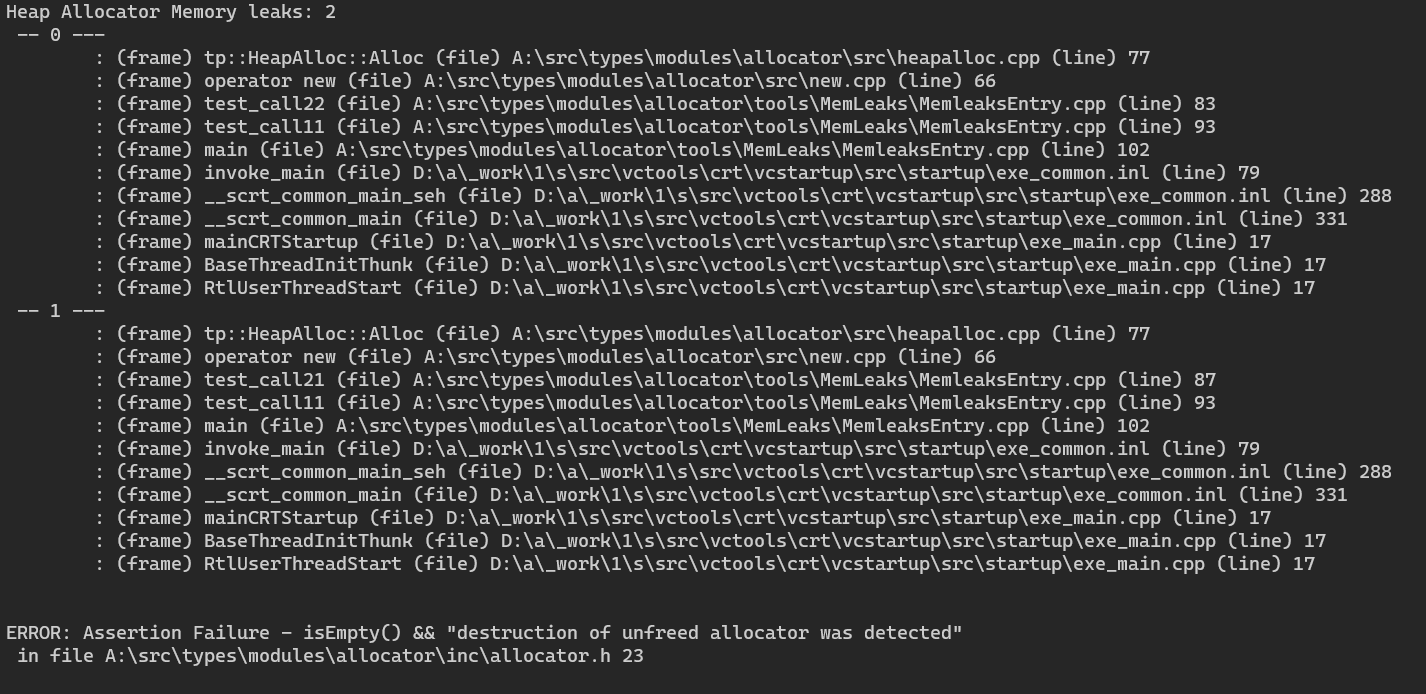
If memory leaks were detected it will be loged in the output console.
|
|
|
|
|
|
|
|
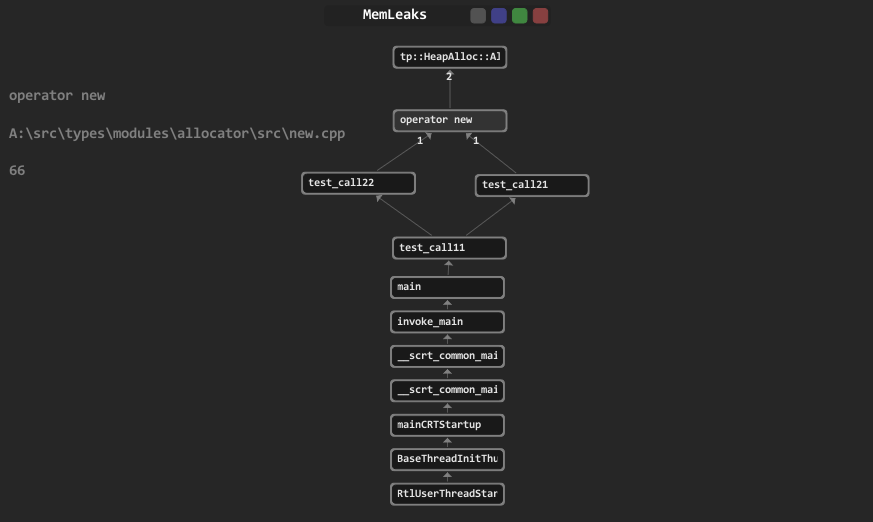
Also debug.memleaks file will be generated in the working directory that can be viewved with MemLeaks Viewver.
|
|
|
|
|
|
|
|
|
|
## Memory Usage Analisys
|
|
Currently outdated
|
|
|
|
## Benchmarks
|
|
Currently outdated
|